

Short answer: the common problems are not solved by choosing a beautiful property. International buyers should verify ownership, seller authority, legal regime, boundaries, access, deposits, taxes, foreign-buyer rules, notary work and advisor credentials before funds move.
Mexico does not have one universal property process for every state, parcel or buyer. Obtain advice for the actual transaction.
1. Confusing marketing with legal proof
A listing, social post or WhatsApp message is an invitation to investigate. It does not prove:
- ownership;
- freedom from liens;
- legal access;
- exact measurements;
- authority to sell;
- permission for the intended use.
Request documents early and let the relevant independent professionals examine them.
2. Paying the wrong person
Before any reservation or deposit, identify:
- the legal owner;
- the person authorized to sign;
- the account receiving funds;
- the written conditions for refund or application to the price;
- the party holding funds;
- what happens if due diligence fails.
Urgency is not a substitute for documentation.
3. Misunderstanding the notary's role
A Mexican notary is central to formalizing many property transfers, but buyers should still ask what the notary's scope covers and what requires another professional.
Technical condition may need an engineer or inspector. Boundaries may need a surveyor. Tax and cross-border consequences may require accountants or lawyers in more than one country.
Choose the notary for the transaction deliberately and provide the proposed ownership structure and intended use before closing.
4. Ignoring land regime and access
Rural land may involve private, ejidal or other social-property issues. A track across a neighboring parcel may not be legal access.
If social property could be involved, consult RAN information and services and obtain specialist advice. Do not convert an online map into a legal conclusion.
5. Assuming measurements match
Compare the legal description, cadastral information, seller's plan and physical occupation. When area or boundaries matter, use a qualified surveyor.
Discrepancies should be resolved before the purchase price and plans depend on them.
6. Underestimating building and service costs
For older homes, inspect roof, structure, moisture, plumbing, electrical work and drainage. For land, verify power, water, wastewater, road and permitted use.
Budget:
- price;
- taxes and notary costs;
- legal and technical review;
- survey;
- immediate repair or infrastructure;
- cooling and energy;
- management when absent.
7. Treating foreign-buyer rules as a generic formula
The correct ownership structure depends on location, nationality, purpose and transaction. Do not accept a one-paragraph explanation from a listing as legal advice.
Ask the notary to explain the structure, costs, ongoing obligations and estate-planning implications in writing.
8. Relying on unverified credentials
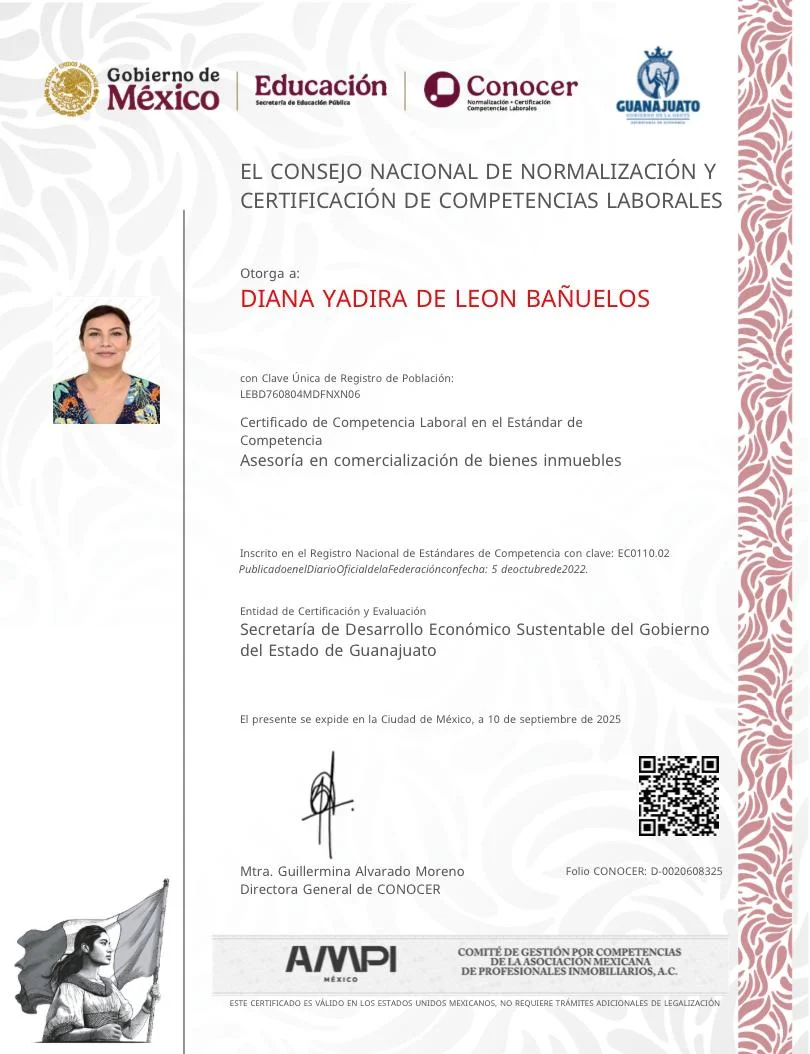
In Yucatan, check the intermediary's current status in the INSEJUPY public registry. Verify AMPI or NAR membership claims separately through their current directories using our AMPI and NAR verification guide.
Use the full advisor verification guide and record the date of each check.
For applicable adhesion contracts, the PROFECO RPCA provides a public search path. Ask a lawyer whether and how consumer-contract rules apply to your service or transaction.
A safer transaction sequence
- Define purpose, budget and ownership needs.
- Visit and inspect the exact property.
- Obtain seller and property documents.
- Verify advisor status and representation.
- Select the notary and other independent professionals.
- Document deposit conditions.
- Complete legal, boundary, technical and tax review.
- Resolve discrepancies before closing.
- Keep signed documents and proof of payment.
Frequently asked questions
Can foreigners buy property in Mexico?
Foreign buyers can acquire interests in Mexican property, but the correct structure and requirements depend on the location and case. Obtain notarial advice before paying.
Is the real estate advisor my lawyer?
Not unless separately qualified and retained as such. Confirm roles and obtain independent legal advice when needed.
Does the notary inspect the building?
Do not assume so. Arrange technical inspection separately when condition matters.
Is a deposit normal?
Deposits can form part of a documented transaction, but verify the recipient, authority, written terms and due-diligence protections first.
Can I rely on an English translation?
Use it to understand the transaction, but confirm which Spanish document is legally operative and obtain qualified translation or legal advice.
Does a license guarantee the property?
No. INSEJUPY status is one professional verification layer; the property still requires its own due diligence.
Ask about a specific property
Send the listing link by WhatsApp. Casas en Valladolid can confirm current availability and help organize the questions for the seller, notary, surveyor and technical inspector.
Editorially reviewed: July 2026. Laws, registries and transaction details can change; verify current requirements for your case.